It's the imagination, (stupid?)...
More than a crisis of social or economic systems, the world's polycrisis is a crisis of imagination. That's not an original claim, but it requires some original thinking.

I just finished teaching a 6-week course on “The New Lives of Images” and, despite my fears that it would be too much heavy thinking for some students, it turned into one of the most enjoyable teaching experiences I’ve ever had. A key reason, I think, is that it freed students not only to think in “approachable big-picture” terms — about the current world crisis, and simultaneously about the very real role that digital media play in their experience of it — but also to think, and to feel, creatively in and around that topic.
That’s not necessarily enough to warrant paraphrasing Bill Clinton’s 1992 electoral catchphrase (“It’s the economy, stupid”), but when we put it into the context of the failures of that kind of thinking — starting with Clinton’s own failure to recognize that neoliberal solutions will only make things worse — it does suggest that there’s nothing obvious, and so nothing to feel stupid about questioning, in reducing complex phenomena to their economics. The reduction itself is a failure of imagination.
Teaching the book gave me opportunities to paraphrase things and to continue developing some of its ideas. Here’s a one-sentence paraphrase of what the book does:
“The New Lives of Images” maps out a series of coordinates for rethinking how imagination — our capacity for image-making and image-bearing — shapes our relations with the more-than-human world, and how we might improve those relations, at a time when the world calls for that.
And here’s a line of thought I continue to develop, which is part of my process-semiotic synthesis of Whitehead and Peirce, and which tells us why imagination is important for us to understand:
People make sense of the world in three ways — which correspond to Peirce’s three main types of sign, to Whitehead’s three main types of perception, and to our neurophysiology.
The first is imagination, which works abductively and imagistically (iconically, in Peircian terms), i.e., through recognizing things by their resemblance to things we’ve encountered before, and through our capacity to modify those recognitions through play, reverie, etc. This comes most easily to us (it’s what we call “intuitive”), has the potential to powerfully move us, is only partially under our control, and can also lead us to powerfully err.
The second is inductive and indexical, which works by collecting observations and tracing them back to their causes, and is the basis for scientific, evidential knowing. And the third is through logical, deductive, synthetic, and symbolic thinking.
Both of the latter two take time and effort, while the first does not, which is why it’s all the more important to understand how it works.
The book defines images not as objects, and certainly not just as visual objects, but as events — encounters with things that bring absences (things not here) into presence, and in so doing connect the past and the present together into the future that is made of them. It’s the immediacy of the image, and its resonance with whatever it is reminding us of through resemblance, that gives it its power. And it’s a power that precedes thought and shapes it.
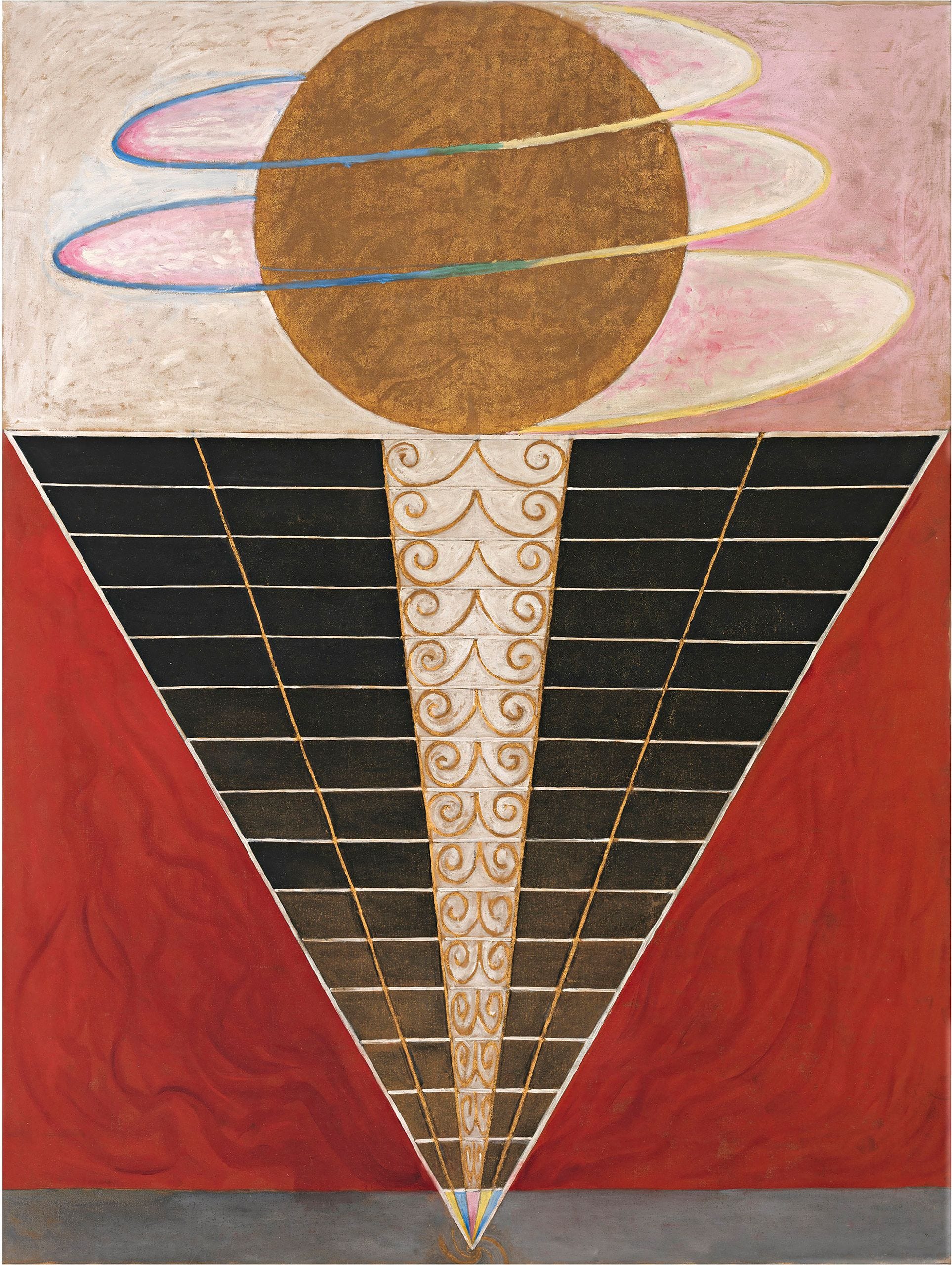
The book examines the work of multiple artists, and it was a bit of a surprise to me that the one whose work students loved the most was Swedish spiritualist-abstractionist Hilma af Klint, whose work I theorize as embodying the “creative-image,” a kind of expression of the artist’s efforts to open up to different futures than those easily imaginable in the present.
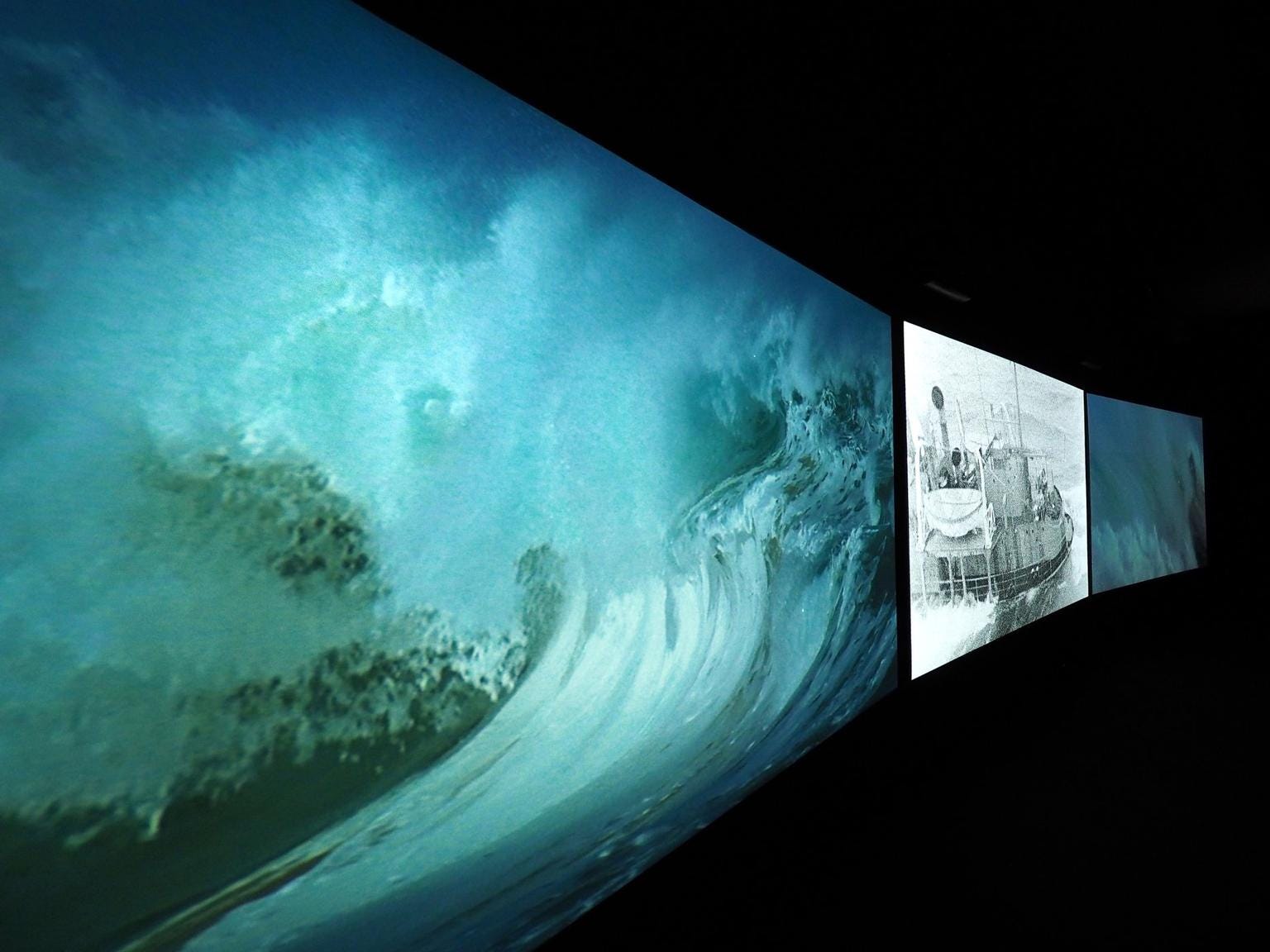
John Akomfrah, whose beautiful multi-channel video work “Vertigo Sea” we saw at the Vancouver Art Gallery (it’s there until January 10, 2027), came in second. (Image below from that.)
My conversation with Am Johal goes deeper into several of the book’s themes, and is perhaps the best primer to it. You can read it here. The Preface to the book is here, and Chapter One is readable on the publisher’s page. A full table of contents is here. You can order it at a 20% discount from the publisher by typing in “IVAKHIV20” when checking out.